
Featured Articles
WHAT IS MITRAGYNA SPECIOSA?
The people of West Kalimantan have long had local knowledge about the use of plants in diverse ecosystems. A study has been conducted to identify one type of plant that exists on the island of West Kalimantan and analyze the relationship between the use of plants and the needs of people’s lives. Mitragyna speciosa or better known as Kratom or Purik belongs to the Rubiaceae tribe and is a natural herbal medicine for the people of Kalimantan from generation to generation. With very minimal living conditions both in terms of economy, health, social and culture coupled with limited human resources and innovation, the existence of traditional medicinal plants such as kratom has an important role in the daily life of the local people of West Kalimantan.
Kratom is a native plant from Southeast Asia, such as Thailand, Malaysia, Myanmar, and Indonesia. This plant is also known by various names in different countries, namely ithang, krathom, kakuam, and thom in Thailand, breed or ketum in Malaysia, and mamboing in the Philippines.
BENEFIT OF MITRAGYNA SPECIOSA
Kratom leaves are used by the public as a medicine for diabetes, severe skin diseases (ulcers), relieving joint pain,
medicine for mothers after giving birth, treating diarrhea, as an ointment for wounds, fever medicine, relieving muscle pain, and reducing appetite.
Kratom leaves have long been used in Thailand for opium and coca-like effects which have stimulant abilities to fight fatigue and increase resistance to sunlight and are used to treat diarrhea and to stop addiction to morphine (UNODC).
According to the Drug Enforcement Administration, consumption of kratom in low doses (2-10 grams) can provide
a stimulant effect, while higher doses can provide effects such as opium, sedative and euphoric effects. Research on sedative testing on male mice concluded that the sedative effect of kratom leaf ethanol extract had greater potency when compared to diazepam.
From these benefits, Kratom has become a highly coveted herbal medicine in the western world, because it has a lot of potential without having to mix it with other herbs.
CLASSIFICATION & PHYSICAL FORM
Kratom (Mitragyna specoisa Korth) Classification :
Kingdom : Plantae
Ordo : Gentianales
Family : Rubiaceae
Genus : Mitragyna
Species : M. Speciosa
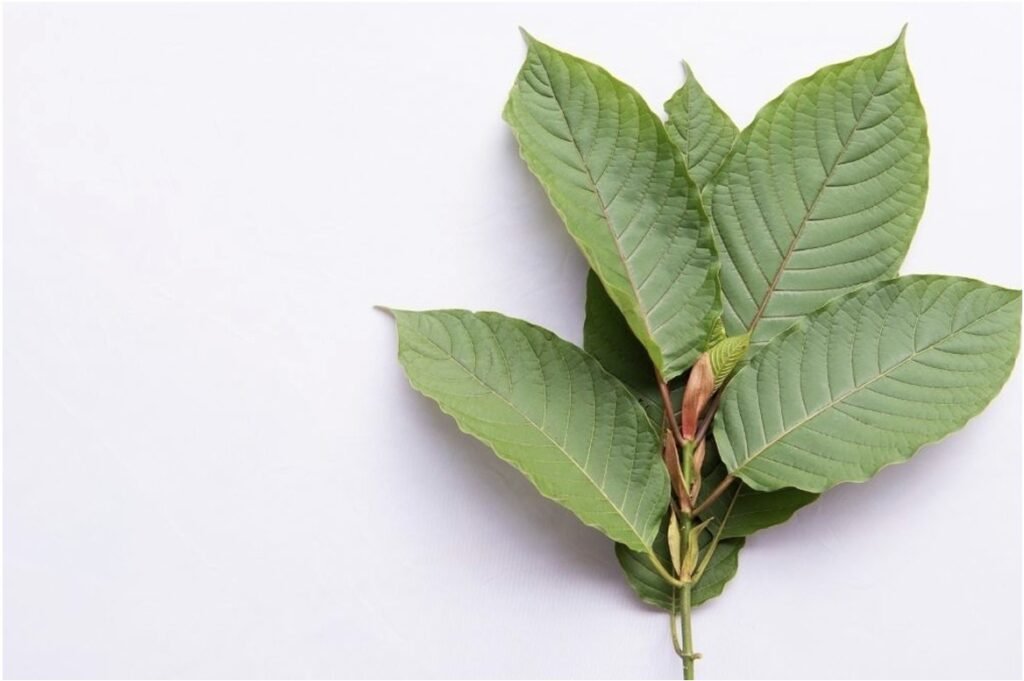
The kratom tree can grow up to 180 mm in diameter with a tree diameter of 100mm, while the leaves are oval and green. Kratom leaf bones are greenish white or red which have a strong texture. The average weight of fresh and dry leaves was about 1.7 and 0.43 g, respectively. Kratom also has yellow flowers and round shape that can grow on trees up to 120 buds. The fruit is in the form of a capsule with many small flat seeds inside (EMCDDA). Phytochemicals resulting from the isolation of various parts of the tree include more than 40 structurally related alkaloids as well as several flavonoids, terpenoid saponins, polyphenols, and various glycosides. The main psychoactive components in this leaf are mitragynine and 7-hydroxymitragynine, both of which are found only in Mitragyna speciosa (EMCDDA).
Front of Kratom Leaf
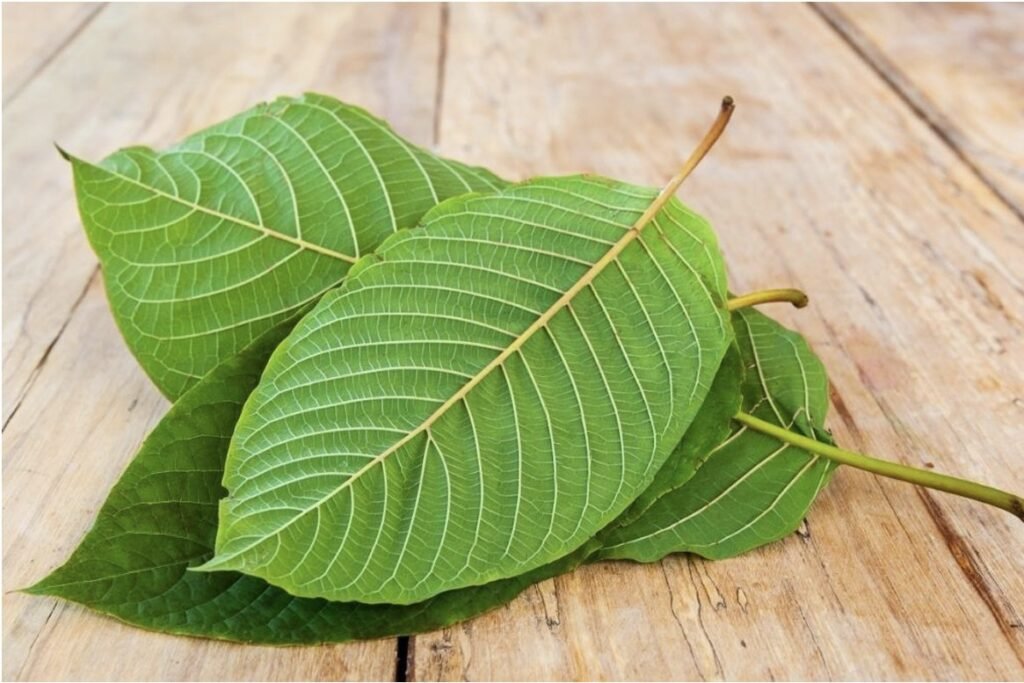
Back of Kratom Leaf